
In today’s society, almost every person has some form of access to the internet. This has resulted in a massive change for the legal sector due to globalisation (Richardson, 2017). This change means that law firms need to get on board with the modern digital age as quickly as possible before they risk losing their clients and their competitive edge.
So how should the legal profession stay up to date? Well, there are a few different aspects of the digital era that they need to stay aware of.
Collective intelligence
Collective intelligence, coined by Pierre Levy in 1997, refers to networked ICTs that can enhance the total of human knowledge by facilitating interaction among people, allow for deep and wide databases as well as promote participation. It is an important aspect of the digital sphere, with collaboration on the rise.
Furtado, Ayres and team (2010) addressed that collaboration is being leveraged by the Web 2.0, with any differences between consumer and information producer decreasing drastically. To demonstrate how this has occurred, they explain the concept of ‘WikiCrimes’, “an example of a Web 2.0 application that offers a collaborative environment based on the use and direct manipulation of maps, in order to register and research criminal events”.
With three main goals, WikiCrimes is allowing the public to get more involved in the participation and spread of criminal information. They aim to give more transparency and publicity to criminal information, to prevent further crime and to encourage more people to report crime. Although it is crucial that the information received it credible.
Participatory culture
Starobin (2009) explored how the new age of participation in the media is changing the world. With a large majority of society using smartphones, they have a cheap recoding device in their pockets at all times.
They offered the thought of how Auschwitz would have have a different result if someone present had a recording device. It would have given the chance to hold people accountable a lot quicker and stop the problem in its tracks.
This then demonstrated how powerful participatory culture can be in today’s society when it comes to stopping crime. Being able to contact emergency services instantly with images allows witnesses of crimes to do so much more than what they could do originally in the witness stand. Hopefully this could help prosecuting become easier with more proof readily available.
Citizen Journalism
Of course citizen journalism, a term used to describe how the audience is now the producer, allows the public to participate in the media and engage with others in a whole new way, but it also creates the potential for legal questions. Rappaport, Adam J, Leith and Amanda M (2007) acknowledged that many of the issues they explore are only theoretical and difficult to predict but it is worth examining these before they become a real issue. The main issue to tackle when it comes to citizen journalism is the problem of copyright laws. Who ends up owing the rights to what is posted? This question was not answered, but it is worth thinking about.
Transmedia Storytelling
Transmedia storytelling, Jenkins (2007) refers to as a process where integral elements of a fiction get dispersed systematically across multiple delivery channels, is typically reserved for the superhero realm. This means that there appears to be a gap regarding transmedia storytelling with reference to the legal profession.
Currently there are hundreds of television shows about the law, such as Suits, How to Get Away with Murder, and Rake, although for entertainment value they are often extremely dramatised.
Therefore, it would be amazing to see transmedia storytelling take over and produce a more realistic depiction of the law which gives audiences the opportunity to learn about the legal sector.
Gamification
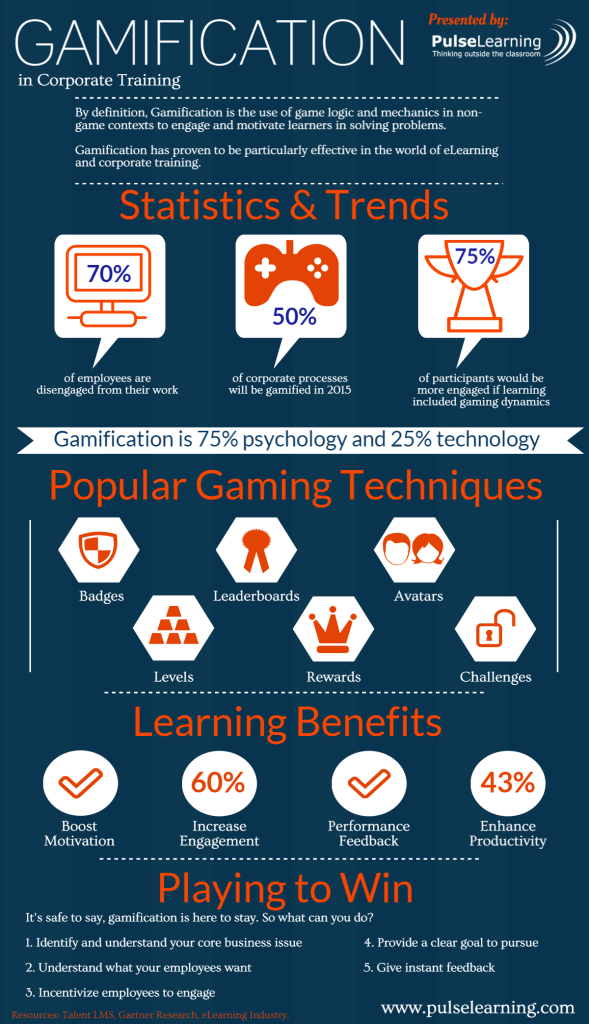
America is leading the way when it comes to lawyers using technology. Kittay, Dan, Bar, Leader (2014) discussed how the Tennessee Bar Association is utilising gamification in their continued legal education department. With 5 years of research, they have identified the best software to meet their needs for creating interactive games. Mindy Thomas Fulks, the bar’s director of CLE stated that they “were looking for ways to make education engaging and interactive”.
Following in their footsteps is the Connecticut Bar Foundation. They have developed a website to provide legal education to the public through employing gamification techniques. It aims to provide “free legal help for people with a very low income” to teach them about what to expect in the courtroom as well as how to behave.
Digital Footprint
Digital footprint is a commonly known concept that refers to the digital record of your interactivity on the internet. Whilst everyone has a digital footprint, it is most likely that they have forgotten the specifics of what might be on record.
Now, when it comes to the legal sphere, a digital footprint can prove to be extremely helpful or rather detrimental to a lawyer’s case. In the United States, lawyers are utilising a system called “Wayback Machine” in order to dig up the digital footprint of the accused as well as the witnesses being brought into court. Gertner (2005) outlines that intellectual property lawyers have been using this technique for several years to find old websites which demonstrate that their clients’ trademark or domain have been misused.
For lawyers, this is a double edged sword. On one hand it could assist in helping your case to succeed, but on the other it could potentially completely derail it. Therefore, it is crucial that you are aware of your client’s internet history. John Wesley Hall, a criminal defence lawyer in the US now commits to asking each client “Have you ever said anything on the internet you would regret?”
Virtuality Reality and Augmented Reality
Lemley and Volokh (2018) discussed how virtual reality and augmented reality are quickly becoming implemented into our lives, and with this comes new legal challenges. One of the main issues that they discussed is how will “street crime” be handled in the virtual sphere. “Street crime”, in the traditional sense, refers to any in-person misconduct, however such behaviour will not be considered a major issue online as no physical harm can be caused to the users. Although, crimes such as sound crime and disturbing the peace may prove to be an issue. Additionally, exposing yourself or verbally harassing may make users uncomfortable. The only issue with this is how to get the police involved in this situation. Lemley and Volokh referred to the “Bangladesh problem”, which entails that if someone were to make a complaint about the VR world to emergency services, that their reaction will most likely be sceptical. It will take a serious crime in order to interest the police in pursing an investigation if the criminal is in a foreign country.
The theoretical solution offered was to introduce virtual reality police and have a virtual reality courtroom in order to prosecute virtual offenders. As the virtual is currently an unknown quantity, it will be a decent amount of time before this is properly introduced, but it is a can of worms worth considering.
Conclusion
The digital era brings with it the opportunity for great successes but it also offers much anxiety to society. Therefore, we must work as a community to tackle the issues as they appear and assist in closing the digital divide. For lawyers, it is a long road ahead to move from the traditional ways of the profession but in order to stay competitive it is certainly a must.
The link to my podcast: https://soundcloud.com/user-516603868/29-nov-2019-8_35_51-pm
References
Centanni, Jillian A (2013). Think Twice Before Posting Online. Intellectual Property Litigation, 24(1)
Furtado, Ayres, De Oliveira, Vasconcelos, Caminha, D’Orleans, Belchoir (2010). Collective Intelligence in Law Enforcement, The WikiCrimes System. Information Sciences, 180(1), 4-17
Gertner (2005). Lawyers Beginning to turn to old websites for evidence. The Daily Record.
Jenkins (2007). Transmedia Storytelling 101. http://henryjenkins.org/2007/03/transmedia_storytelling_101.html
Jenkins (2011). Transmedia Storytelling 202: Further Reflection. http://henryjenkins.org/2011/08/defining_transmedia_further_re.html
Kittay, Dan, Bar Leader (2014). Not Just Fun and Games: Lawyers and the Public Learn Via Gamification. 39(2).
Lemley & Volokh (2018). Law, Virtual Reality and Augmented Reality. University of Pennsylvania Law Review 166(5).
Rappaport, Adam J, Leith, Amanda M (2007). Brave New World? Legal Issues Raised by Citizen Journalism. Communications Lawyer, 25(2).
Richardson (2017). In-house Legal Teams Caught in Growing Digital Divide. Credit Controls 38(3/4).
 Lilyanya's blog